
Supplier Audit Checklist: 47 Questions That Catch Real Problems
Discover the essential questions to ask during a supplier audit to ensure quality and compliance. This comprehensive checklist will help you identify potential issues before they become major problems.
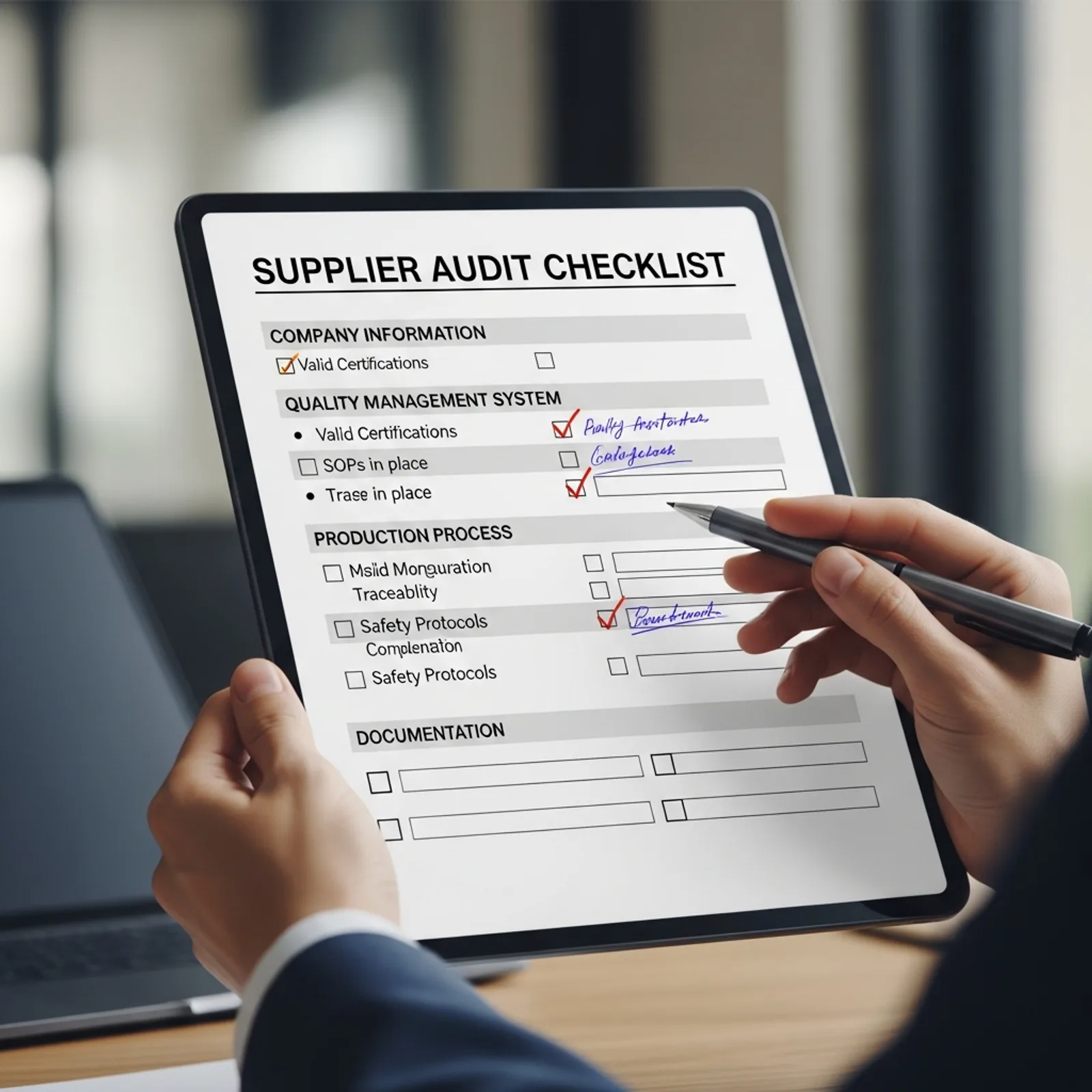
Supplier Audit Checklist: 47 Questions That Catch Real Problems
Discover the essential questions to ask during a supplier audit to ensure quality and compliance. This comprehensive checklist will help you identify potential issues before they become major problems.
Conducting a supplier audit is a critical step in ensuring that your supply chain remains robust and reliable. This process involves evaluating a supplier's compliance with industry standards and regulations, as well as their ability to meet your company's specific requirements. By asking the right questions, you can uncover potential issues that might otherwise go unnoticed.
Why Supplier Audits Matter
Supplier audits are essential for maintaining quality control and minimizing risks. They help identify areas where suppliers may fall short, allowing you to address these issues proactively. This not only protects your brand's reputation but also ensures that your products meet customer expectations.
Key Areas to Focus On
When conducting a supplier audit, it's important to focus on several key areas:
- Quality Management Systems : Does the supplier have a robust quality management system in place? Are they ISO certified?
- Compliance with Regulations : Are they compliant with industry-specific regulations and standards?
- Production Capacity : Can they meet your demand without compromising quality?
- Supply Chain Management : How do they manage their supply chain to ensure timely delivery?
- Risk Management : What measures do they have in place to mitigate risks?
By focusing on these areas, you can gain a comprehensive understanding of a supplier's capabilities and limitations.
The 47 Essential Questions
Here are 47 questions that can help you catch real problems during a supplier audit:
- What quality management certifications do you hold?
- How do you ensure compliance with industry regulations?
- Can you provide documentation of your quality control processes?
- How do you handle non-conformities in production?
- What is your process for continuous improvement?
- How do you manage changes in production processes?
- What are your lead times for production and delivery?
- How do you ensure the traceability of your products?
- What is your policy on recalls and corrective actions?
- How do you manage supplier relationships?
- What is your approach to risk management?
- How do you handle capacity constraints?
- Can you provide references from other clients?
- What is your process for handling customer complaints?
- How do you ensure data security and confidentiality?
- What are your sustainability practices?
- How do you manage your workforce to ensure quality?
- What training programs do you have for your employees?
- How do you handle logistics and transportation?
- What is your policy on subcontracting?
- How do you ensure the quality of raw materials?
- What is your process for supplier evaluation?
- How do you handle emergency situations?
- What is your approach to innovation and technology?
- How do you manage inventory levels?
- What is your policy on ethical sourcing?
- How do you ensure compliance with labor laws?
- What is your process for product testing and validation?
- How do you handle product recalls?
- What is your approach to customer service?
- How do you manage product warranties?
- What is your policy on returns and exchanges?
- How do you ensure compliance with environmental regulations?
- What is your process for handling hazardous materials?
- How do you manage product lifecycle?
- What is your approach to cost management?
- How do you handle product customization requests?
- What is your policy on intellectual property rights?
- How do you ensure compliance with trade regulations?
- What is your process for handling defective products?
- How do you manage supplier audits?
- What is your approach to quality assurance?
- How do you handle supply chain disruptions?
- What is your policy on conflict minerals?
- How do you ensure compliance with anti-corruption laws?
- What is your process for handling product obsolescence?
- How do you manage customer feedback and satisfaction?
These questions are designed to provide a thorough evaluation of a supplier's operations and identify potential areas of concern.
Conclusion
Conducting a thorough supplier audit using these 47 questions can help you catch real problems before they impact your business. By focusing on key areas such as quality management, compliance, and risk management, you can ensure that your suppliers meet your standards and contribute to your company's success. Remember, a proactive approach to supplier audits not only safeguards your supply chain but also enhances your brand's reputation and customer satisfaction.