
Internal vs External Audit vs Certification Audit: A Manufacturer's Guide
A complete manufacturer's guide to internal vs external audit and certification audits, explaining what each one is, how they differ, and how to prepare for all three.

The word audit covers more ground than most people realize. In a manufacturing quality system, three distinct types of audit do very different jobs, and confusing them leads to poor preparation and unwelcome surprises. The internal vs external audit distinction is the one manufacturers ask about most, but the full picture includes a third category, the certification audit, that sits within the external family and carries the highest stakes of all. Understanding how these three relate is fundamental to running a quality system that holds up under scrutiny.
This guide explains each audit type in depth, what it is, who runs it, what it is for, and how to prepare, then shows how they fit together into a single coherent programme. Whether you are new to quality auditing or refining an established manufacturing quality management system , this is the map that makes the whole landscape clear.
The Three Types of Audit at a Glance
Auditors classify these audits by party because they serve distinct purposes, and those distinctions reflect the key characteristics of each audit type. An internal audit is a first party audit, conducted by an organization on itself. An external audit is a broad category covering audits conducted by someone outside the organization, which splits into second party audits, run by a customer or on their behalf, and third party audits, run by an independent body with no stake in the outcome. A certification audit is a specific and important kind of third party audit, the one that results in a recognized certificate such as ISO 9001. The table below sets out the essentials before we examine each in detail.
Factor | Internal Audit | External Audit | Certification Audit |
Party | First party | Second or third party | Third party |
Who conducts it | Your own trained staff | Customer or outside body | Accredited certification body |
Main purpose | Self improvement, readiness | Verify compliance and support audited financial statements when financial reporting is in scope | Grant or renew certification |
Frequency | Ongoing, planned schedule | Varies by customer | Initial, surveillance, 3 year cycle |
Outcome | Findings for improvement | Approval or supplier rating | Certificate issued or maintained |
Stakes | Low, internal | Medium, commercial | High, market access |
Internal Audits: Auditing Yourself
An internal audit is your organization examining its own quality management system, conducted by your own trained personnel. It is a formal requirement of ISO 9001 under clause 9.2, but the real value goes well beyond compliance: internal audits help ensure compliance and surface compliance issues early. Internal audits are your early warning system, surfacing nonconformities and improvement opportunities while you still have time to act on them quietly, long before any outside party gets involved.
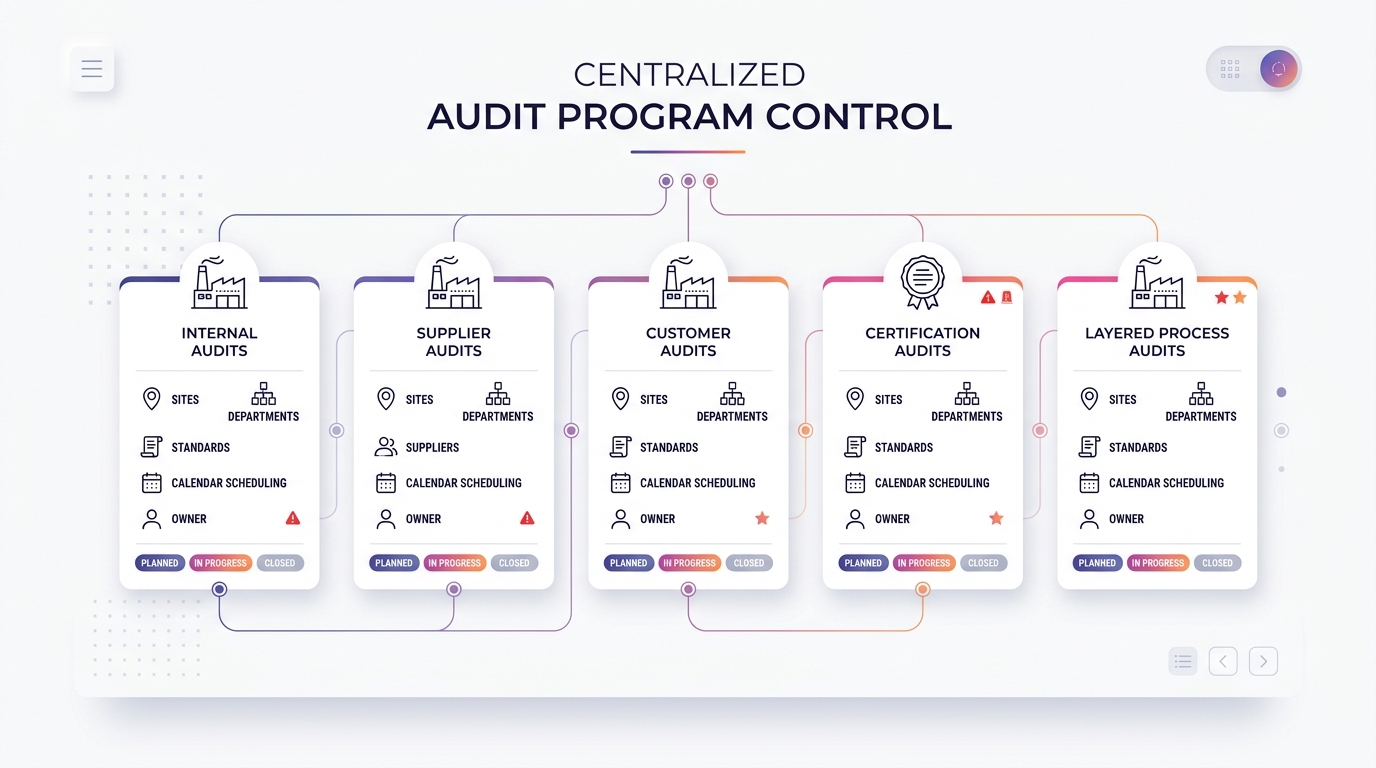
The defining feature of an internal audit is independence within the organization. The person auditing a process should not be the person responsible for it, because objectivity is the whole point. Internal audits focus on the organization's internal controls, operational efficiency, and adherence to regulatory requirements. They feed your management review with real evidence and provide feedback to the organization's management. Internal auditors work within the organization and report directly to senior management or the audit committee. Crucially, they are the single best way to prepare for the external and certification audits that carry higher stakes.
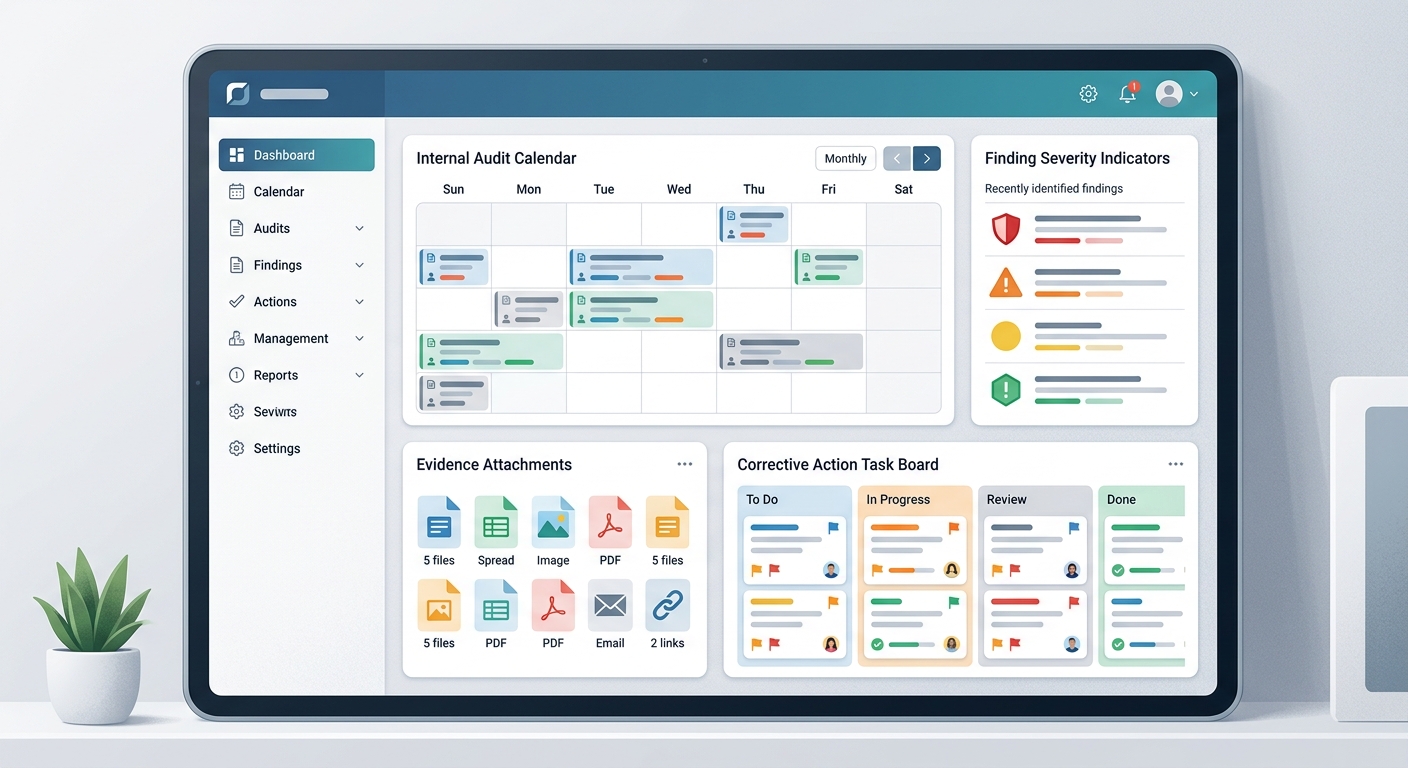
A strong internal audit programme runs on a planned schedule, with the audit approach tailored to risk and process importance, often rolling through different processes across the year so the whole system is covered at least annually, with higher risk areas visited more often to identify potential risks and help mitigate risk. Findings need owners, root cause analysis, corrective action, and verification that the fix held. Managing that cycle inside a centralized quality platform means each audit builds on the last rather than starting from a blank page, and it keeps every finding visible until it is genuinely closed. For a deeper walkthrough, our guide to the ISO 9001 internal audit checklist breaks the process down clause by clause, and stronger internal audit reports with better follow-up can also support internal improvements that strengthen adjacent business processes.

An external audit is any audit conducted by a party outside your organization, and it divides into two important subtypes. The key difference in internal and external audit work is that internal reviews support improvement from within, while external audits focus on independent verification. Someone with their own interests, or an obligation to be independent, is assessing your system, and external audits serve independent verification for outside parties, so the outcome affects your relationships and your market access rather than just your internal improvement plans.
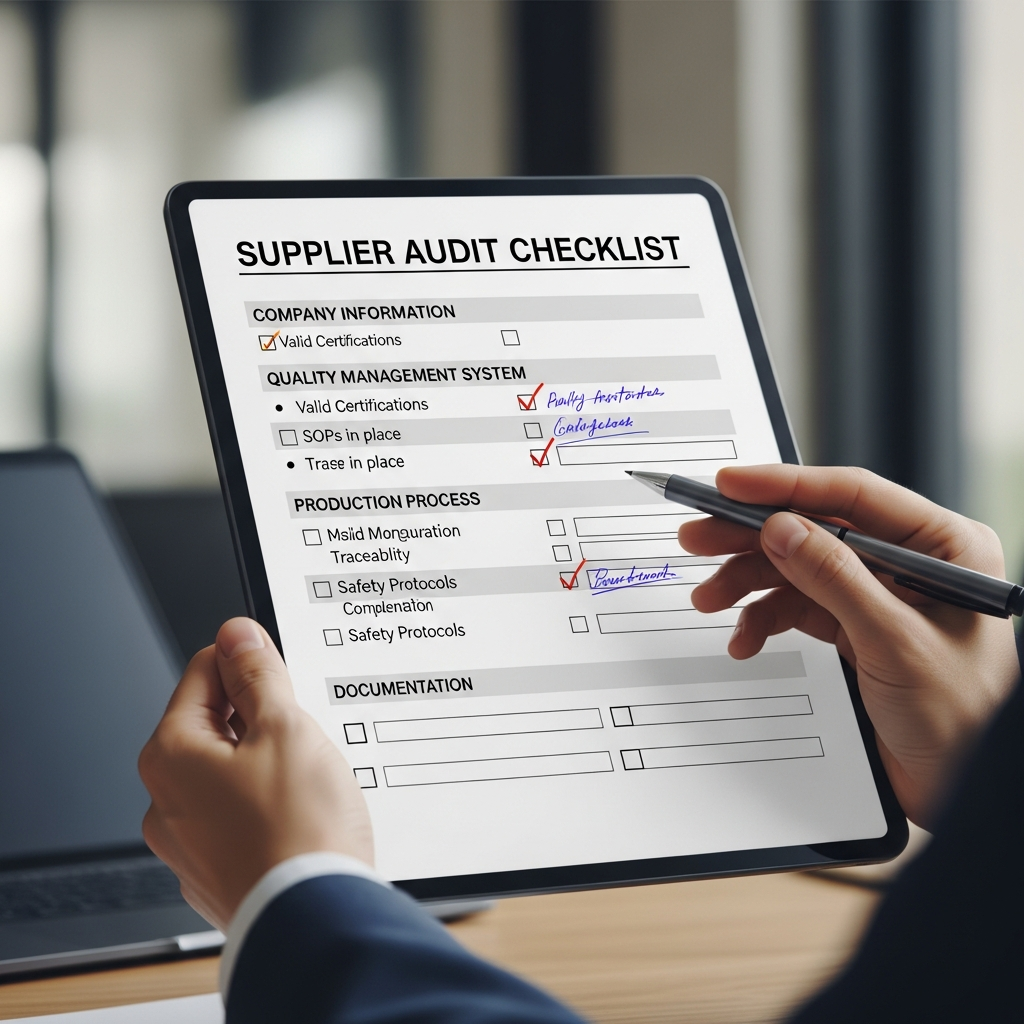
A second party audit is conducted by a customer, or by someone acting on the customer's behalf, to verify that you meet their requirements before they place or continue business with you. In manufacturing supply chains these are common and consequential. A major customer auditing a supplier's quality system can make the difference between winning a contract and losing it, and a poor result can put existing business at risk. Second party audits tend to focus on the specific requirements that matter to that customer, including industry requirements in sectors with stricter oversight, which means preparation is partly about understanding what they care about most.
A third party audit is conducted by independent external auditors from external audit firms or other qualified bodies, often certified public accountants when the scope covers financial statements, with no commercial stake in the result, and external audits provide credibility around the organization's financial statements. Because the auditor is independent, a good third party result carries weight with everyone, not just one customer, which supports financial integrity. External auditors maintain independence, often report directly to external stakeholders and regulatory bodies, and follow generally accepted auditing standards (GAAS), including verification against accounting standards when financial reporting is in scope. This independence is what gives third party audits their credibility and is why certification, the most important third party audit, is so widely recognized. External audit reports can provide assurance through the auditor's opinion on the company's financial statements and offer insights into financial performance when the scope includes the company's financial statements or financial records. Whichever type you face, the preparation principle is the same: a system that keeps you audit and inspection ready year round turns an external audit from a scramble into a formality.
Certification Audits: The Highest Stakes
A certification audit is a specialized third party audit conducted by an accredited certification body to determine whether your quality management system meets a recognized standard such as ISO 9001. It is the audit that results in the certificate itself, the one your customers ask to see, and getting it right is often a prerequisite for doing business in regulated or contract driven markets. Because of that, it carries the highest stakes of the three audit types.
Certification is not a single event but a three year cycle. It begins with an initial certification audit, usually conducted in two stages. Stage 1 is a readiness review, where the auditor examines your documentation and confirms your system is ready for full assessment. Stage 2 is the main event, an on site audit where the auditor interviews staff, observes how work actually happens, and gathers objective evidence that your system meets the standard in practice. If you pass, the certificate is issued.
The certificate does not last forever on its own. In the first and second years after certification, the body conducts surveillance audits, lighter assessments that confirm you are maintaining the system. In the third year a full recertification audit comes due, after which a new three year cycle begins. This ongoing rhythm is why certification is best understood as a continuous commitment rather than a one time hurdle, and why the manufacturers who handle it best are those whose systems are always ready rather than crammed into shape before each visit.
How the Three Audit Types Work Together
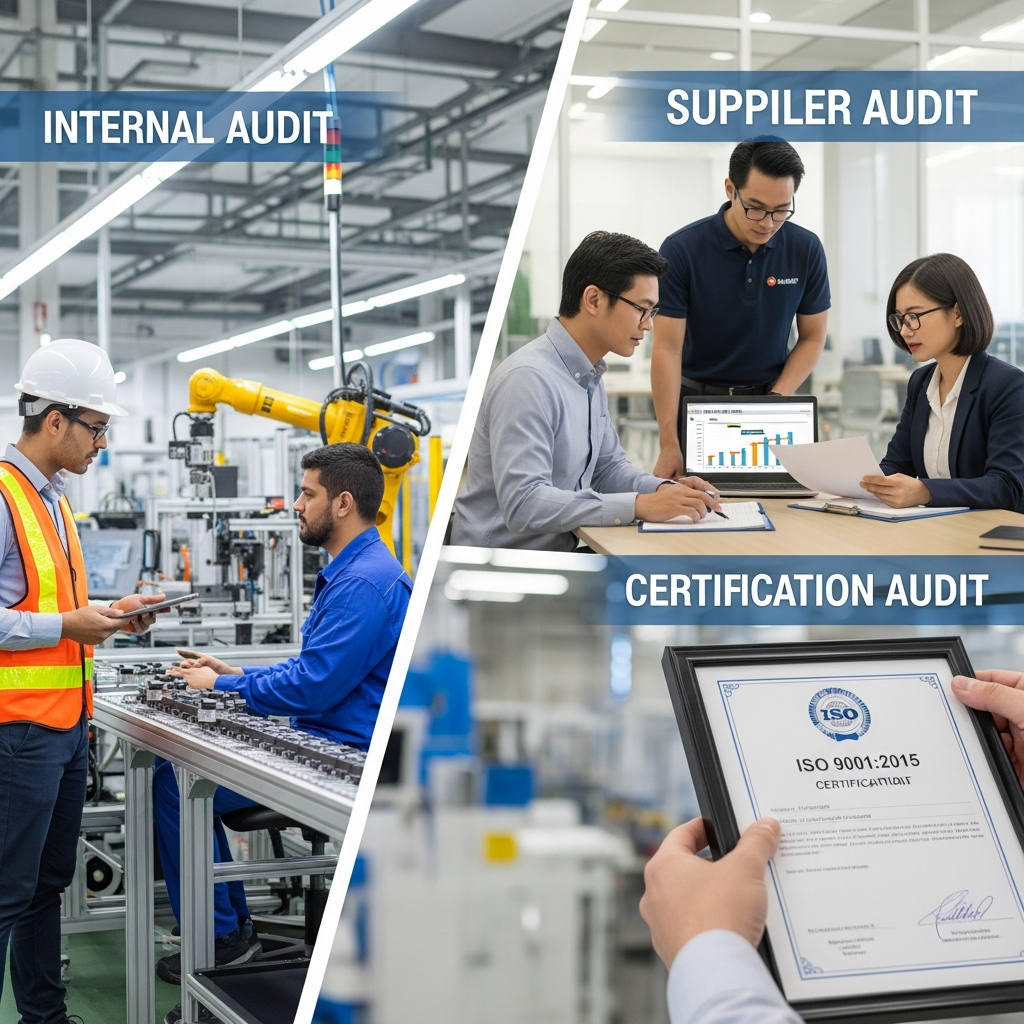
Internal audits serve management and the board internally, while external audits provide credibility to customers, regulators, and certification bodies. Internal and external audits form a layered, complementary system, each reinforcing the others. Internal audits sit at the foundation, catching problems early and keeping the system healthy. External second party audits verify your quality to the customers who depend on it. Certification audits provide independent, universally recognized proof that your system meets a formal standard. Together they give you self awareness, commercial credibility, and market access, with audit services working as complementary layers rather than alternatives. Internal and external auditors can support one another by sharing relevant insights about controls and readiness.
The practical relationship runs in one direction above all: strong internal audits make every external and certification audit easier by strengthening internal controls and driving operational improvement. When your own team is finding and fixing issues on a planned schedule, there is far less for an outside auditor to discover. Internal audits are, in effect, your rehearsal for the assessments that count. This is why organizations that invest in a genuine internal audit programme, supported by a system that helps them prove traceability and address nonconformances , consistently sail through external and certification audits that leave less prepared competitors scrambling.
Common Audit Mistakes to Avoid
Understanding the audit types is only half the battle. The manufacturers who struggle tend to make the same avoidable errors across all three, and knowing them in advance is the cheapest form of preparation. The first and most common is treating audits as periodic events rather than a continuous discipline. A team that only thinks about its quality system in the weeks before an audit will always be reconstructing evidence under pressure, and reconstructed evidence rarely holds up to a trained auditor's questions or the critical thinking used to evaluate them.
A second frequent mistake is closing findings on paper without verifying that the underlying problem is actually fixed. A corrective action that addresses a symptom rather than the root cause will resurface, often at the worst possible moment during an external or certification audit. Effectiveness verification, confirming that a fix genuinely worked before the finding is closed, is what separates a mature quality system from a reactive one. A third mistake is a lack of independence in internal audits, where people effectively audit their own work and, understandably, fail to see the gaps, especially when a larger organization relies on its internal audit department for in-house coverage.
Finally, many organizations underestimate the importance of frontline staff during audits. External and certification auditors routinely ask the people doing the work to explain how they do it, and confident, accurate answers are among the strongest possible evidence that a quality system is real rather than paper deep; human resources and other frontline functions may also be questioned on process understanding and policy compliance. This is why training, engagement, and a system that keeps current procedures visible to everyone matter so much. Keeping your whole team working from one connected quality system rather than outdated local copies removes one of the most common sources of audit findings.
Preparing for All Three Types of Audit
Although the three audit types differ in purpose and stakes, the foundations of good preparation are remarkably consistent. Every audit, internal or external, asks the same underlying question: can you demonstrate that your quality system does what your documentation says it does? The answer always comes down to evidence. Records that are complete, organized, current, and quickly retrievable are what separate a smooth audit from a painful one, regardless of who is conducting it.
For internal audits, preparation means following a clear, risk-based audit plan that is periodically reassessed, using trained and independent auditors, and maintaining a reliable process for turning findings into verified corrective actions. That preparation helps provide assurance over internal controls, compliance, and governance processes as the review moves forward. For second party audits, it means understanding the specific requirements the customer cares about and being able to evidence them directly, since some external reviews are typically required by customers or lenders before business proceeds. For certification audits, it means ensuring your entire system aligns with the standard and that your documentation, from your quality policy through to your records, tells a consistent story; similar external assurance is also typically required for public companies and other regulated entities when financial reporting is involved. In every case, the enemy is scattered, out of date, or unfindable information.
This is exactly where the right system changes the economics of auditing. When your procedures, records, findings, and corrective actions all live in one connected platform rather than across binders, drives, and inboxes, preparation stops being a periodic emergency and becomes a steady state. QualityReady is built to keep manufacturing teams continuously audit ready across every standard they hold , and it integrates with the ERP and inventory tools you already run rather than forcing a replacement. To see how it handles all three audit types under one roof, you can request a QualityReady demo .
Building an Audit-Ready Organization
Understanding the internal vs external audit distinction, and where the certification audit fits within it, is the starting point for a quality system that inspires confidence rather than anxiety. Internal audits keep you honest and improving. External audits prove your quality to the customers who rely on it. Certification audits give you independent, recognized credibility and access to the markets that demand it. The organizations that thrive are the ones that treat all three not as separate ordeals but as a single, continuous discipline of readiness. To see how QualityReady keeps you prepared for every audit that comes your way, explore the QualityReady platform or book a demo today.